Run a private school, gan yeladim, after-school program (tzaharon), tutoring practice or translation office in Israel? Replace the Facebook page and the PDF flyer with a real website. Choose a theme, edit it in the browser, connect your own domain and publish. There is a 14-day free trial that starts with a card.
Website themes for schools, kindergartens, tutors and translators
Pick a theme built for your school or kindergarten, your private tutoring practice or your translation office — presentation, online bookings and contact. Customize it visually and publish the same day, with hosting and SSL included.
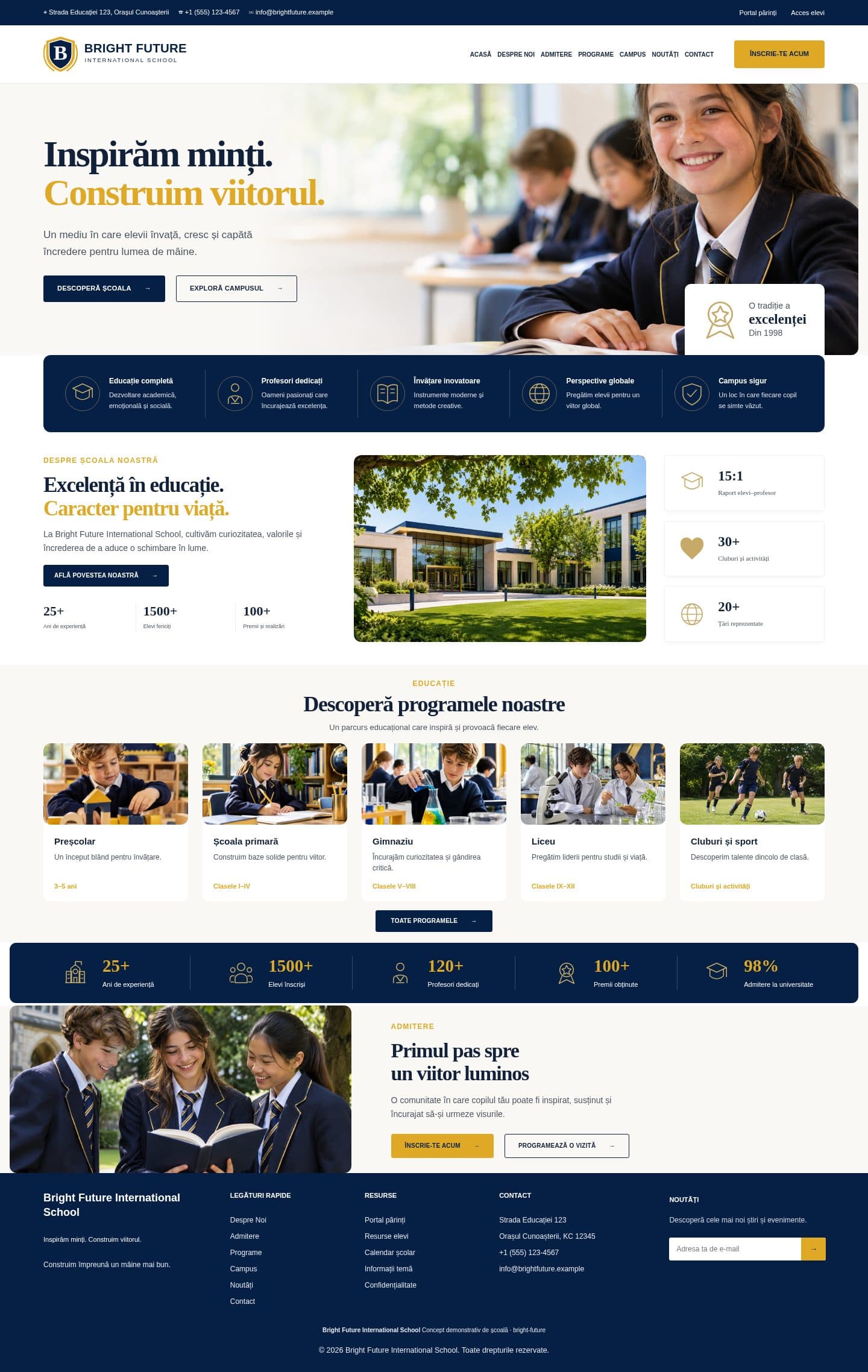
Bright Future
Navy and gold school theme with campus, five programs, admissions, family resources and visit requests. Romanian and English.
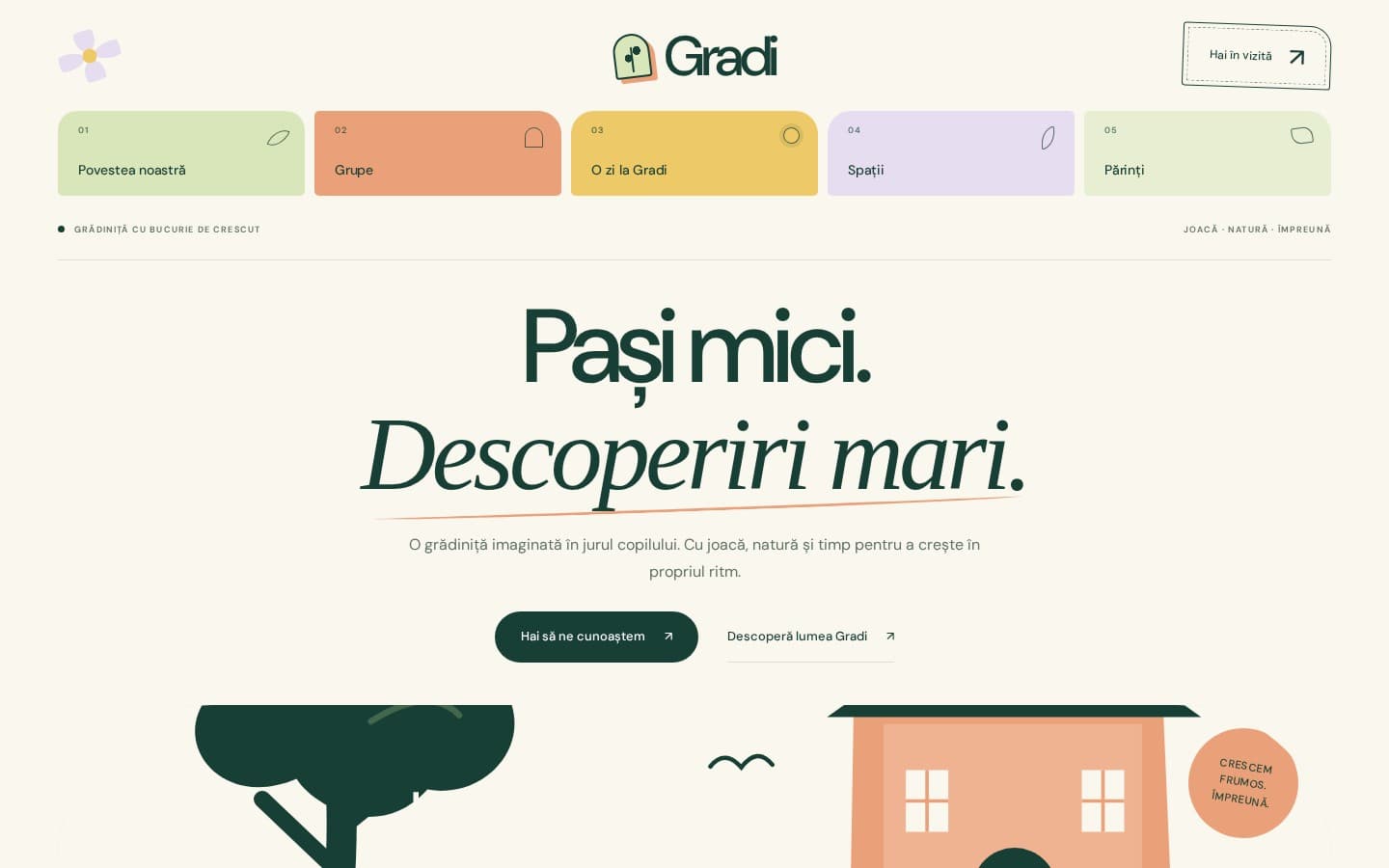
Premium kindergarten theme with cream, forest green and original illustrations. Age groups, daily rhythm, spaces, team, parent guides and visit requests. RO / EN.
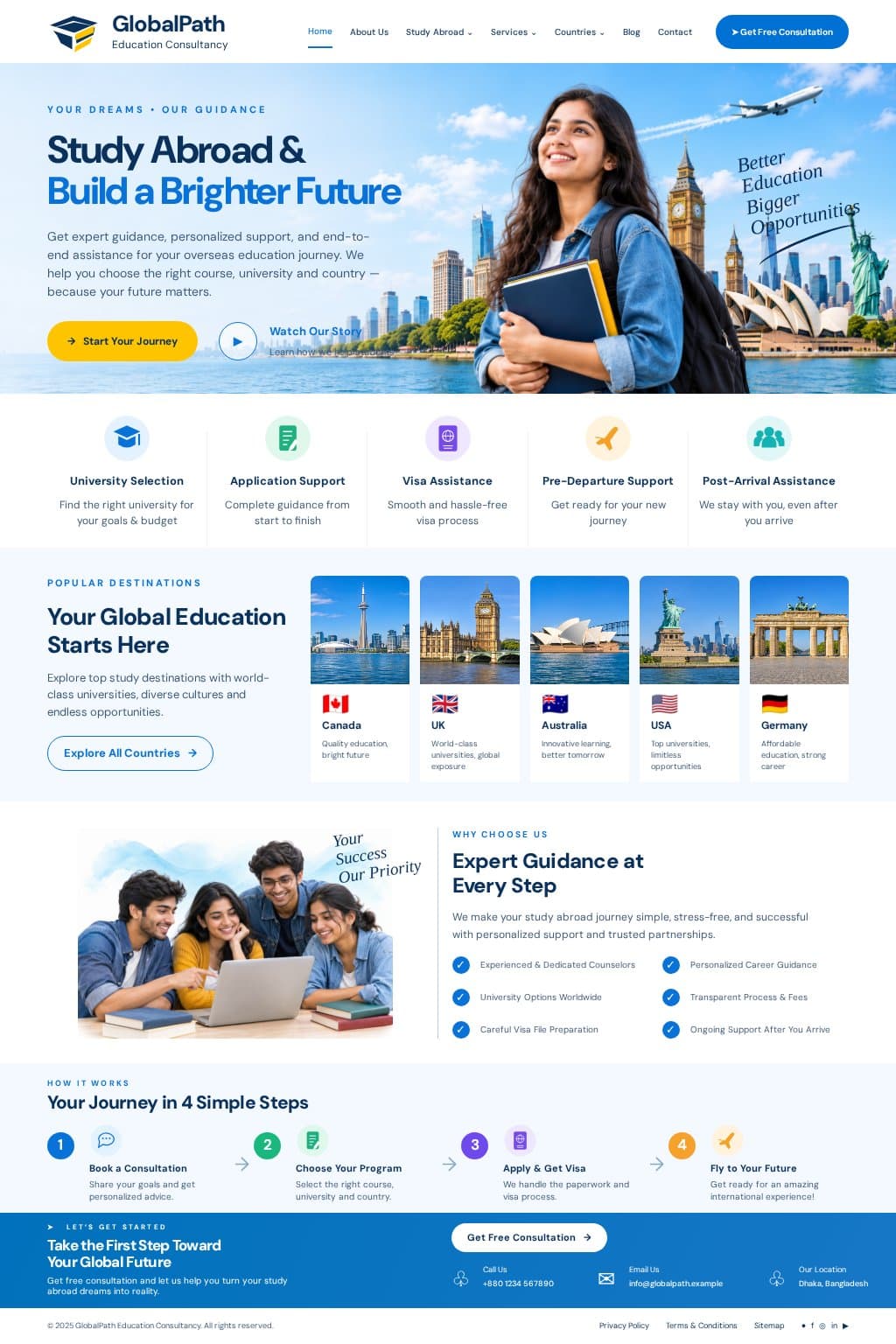
A presentation site for a private tutor: testimonial hero, lesson types, student reviews, key stats, blog and contact. Online booking for lessons, no store.
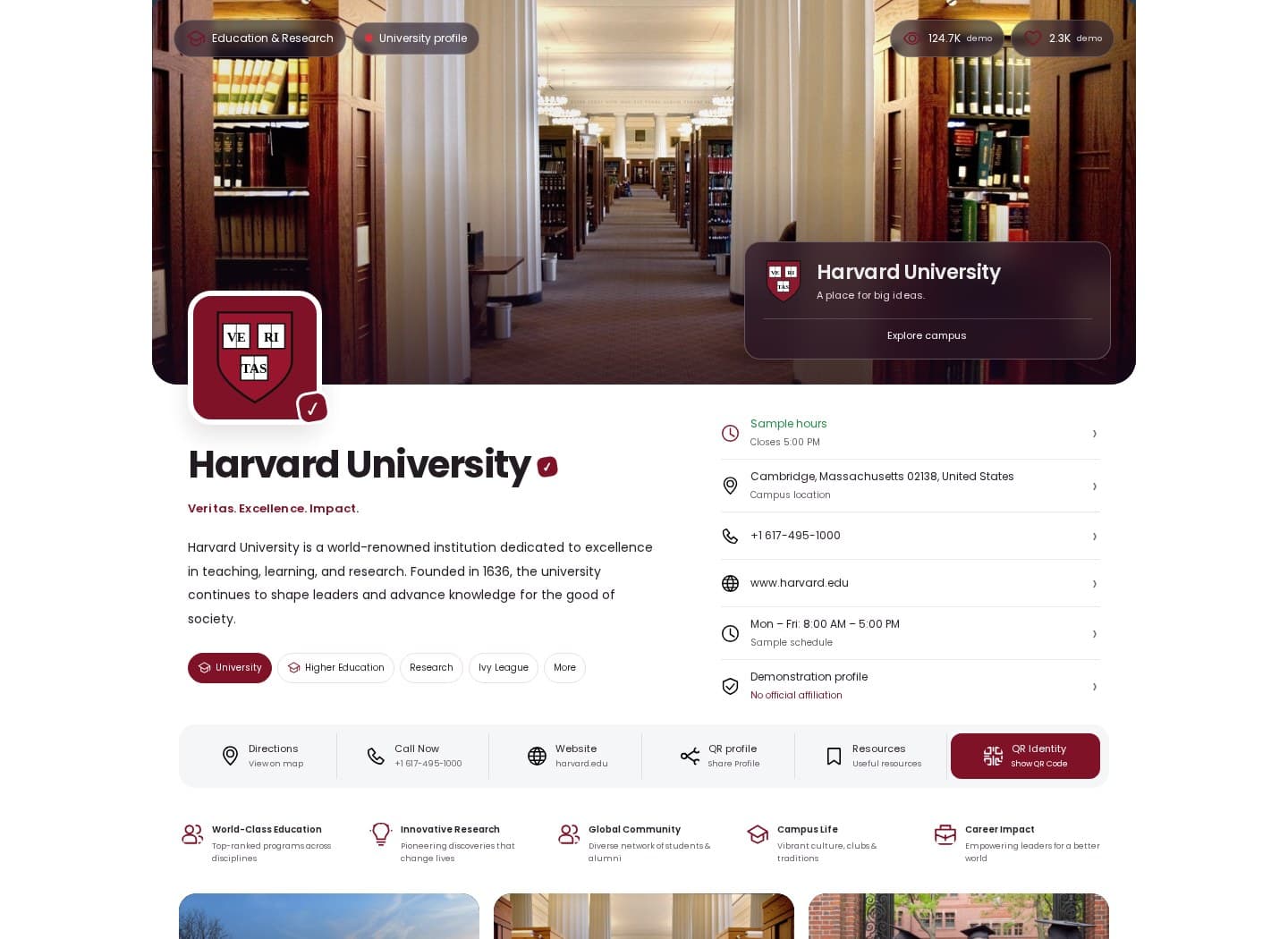
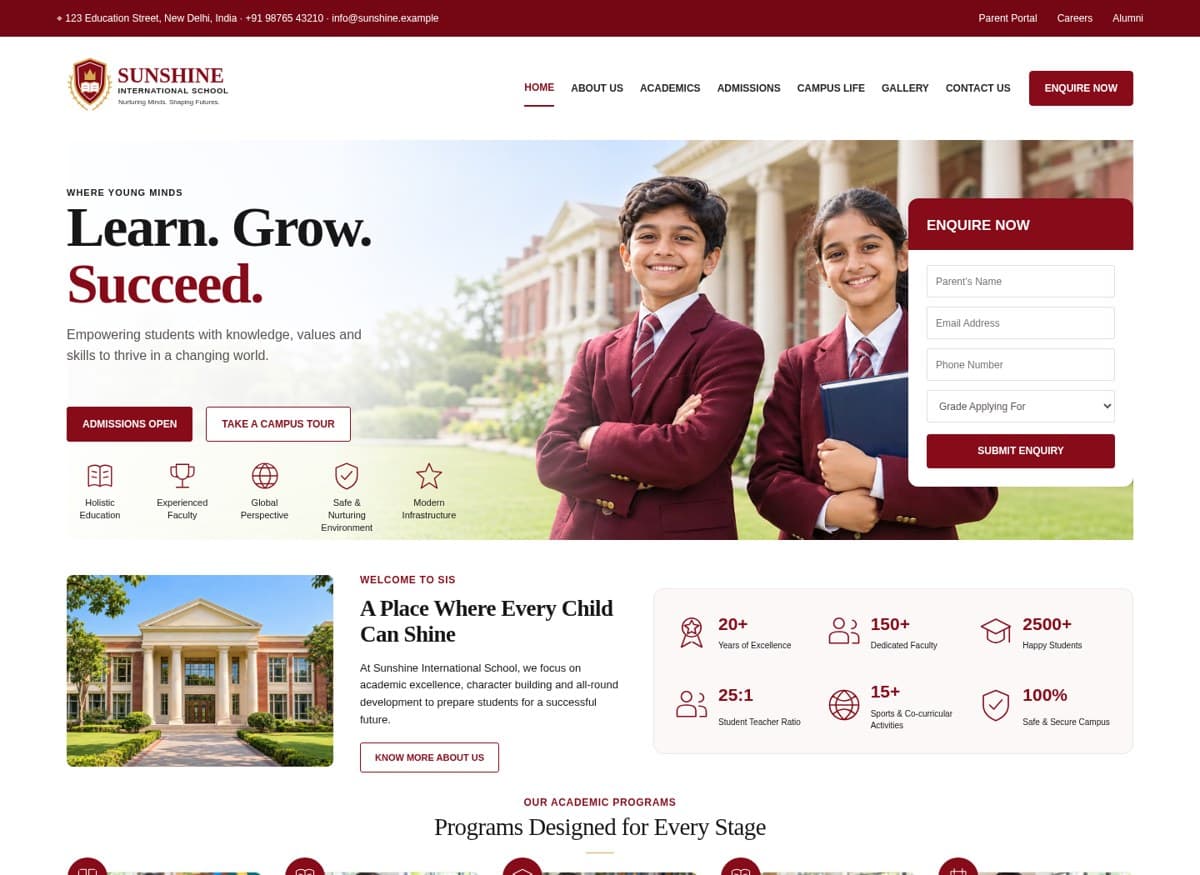
A presentation site for private schools and kindergartens: hero with your institution, welcome section, benefits, teaching staff, testimonials and partners. Online booking for visits/enrolment, no store.
Families in Israel research schools, kindergartens, tutors and translators online long before they pick up the phone. This guide set explains what a local education website needs, and how 4SoftEdu lets you build and publish one from a ready-made theme.
Why Israeli education businesses need their own website
Education in Israel is a mix of state schools, state-religious schools, recognised but unofficial institutions, independent schools, private kindergartens, a large tutoring culture and a busy market for certified translation. Parents compare these options on a phone, often in the evening, and they usually search in Hebrew, but a growing group of immigrants, expatriate families, diplomats and international students searches in English. An English-language site speaks to that group directly.
A website is also the one place you fully control. Social media pages change their rules, directory listings bury you between competitors, and word of mouth only travels so far. A simple site that states who you are, which ages or services you cover, where you are located, what a typical year or course looks like and how to get in touch answers the first ten questions every family asks.
Trust matters more in education than in almost any other sector, because parents hand over their children or their important documents. Clear names, a real address, published policies and honest descriptions of what you do are the quiet signals that turn a visitor into an enquiry.
Parents compare several schools or gan options before contacting any of them.
Immigrant and expatriate families often start their search in English.
A tutor or translator without a site depends entirely on referrals.
What 4SoftEdu is, and what it is not
4SoftEdu offers a theme-based builder for the public website of an education business. Text, images and colours are edited there; internal educational processes belong to the distinct EDU module. Review the plan and the permissions available in your panel before relying on that module. The following pages address the information visitors need to understand your services.
Every account starts with a 14-day free trial, which begins with a card. The domain name is not included: you connect your own domain, for example a .com, .net or .org address, which keeps the name under your control. Servers are located in the EU, in a data centre in Finland.
If you want visitors to book a school tour, an introductory lesson or a translation consultation, the site can link to a public 4appointments booking page. That is a button or link on your site, not an embedded calendar, and it does not send automatic reminders.
How this guide set is organised
There are separate guides for private schools, private kindergartens, private tutors and translation bureaus, because each audience searches differently and expects different proof. Read the one that matches your business first, then move on to the shared guides on content, enrolment, privacy, themes, booking and domains.
The shared guides follow the order in which most owners work. First decide what to publish, using the content checklist. Then write the enrolment information page. Then review what you collect from families and how you describe it. Finally choose a theme, connect a domain and publish.
None of this replaces advice from the Ministry of Education, the Privacy Protection Authority or a lawyer. Where a rule matters, the guides tell you what to check and where, rather than promising that a website alone makes you compliant.
A realistic plan for your first month
In the first week, collect the facts: your exact legal name, address, opening hours, age ranges or services, languages of instruction, fees policy and a few real photographs. In the second week, choose a theme and write the core pages in plain, friendly English, adding Hebrew or Arabic versions elsewhere if your audience needs them.
In the third week, connect your domain, check every page on a phone and ask two or three parents or clients to read it and tell you what is unclear. In the fourth week, publish, add the site to your Google Business Profile and share the link with the people who already know you.