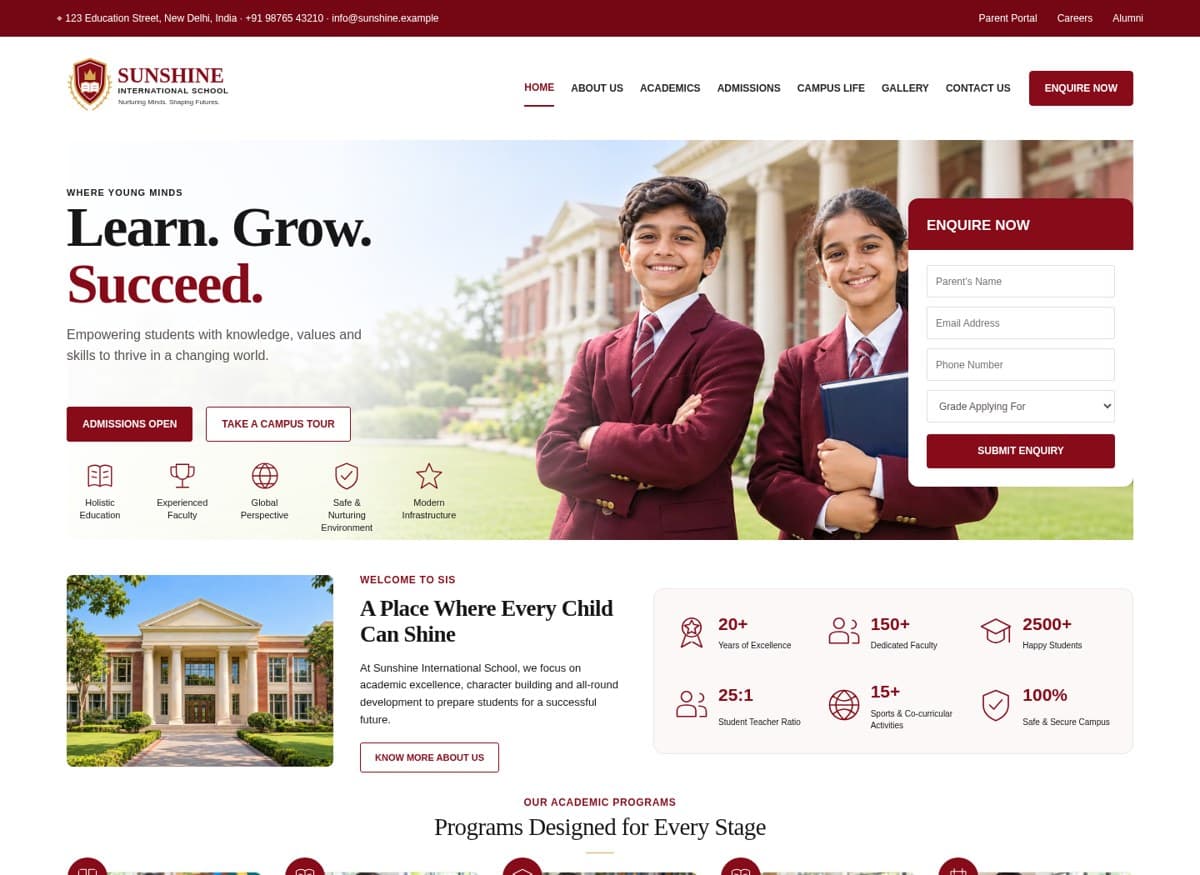
School website builder in Pakistan for private schools, academies and tutors
Run a private school, tuition academy, Montessori playgroup or translation agency in Lahore, Karachi, Islamabad or anywhere else in Pakistan? Choose a theme, edit it in your browser and publish a public website in a few steps. Try it free for 14 days, with a card.
Website themes for schools, kindergartens, tutors and translators
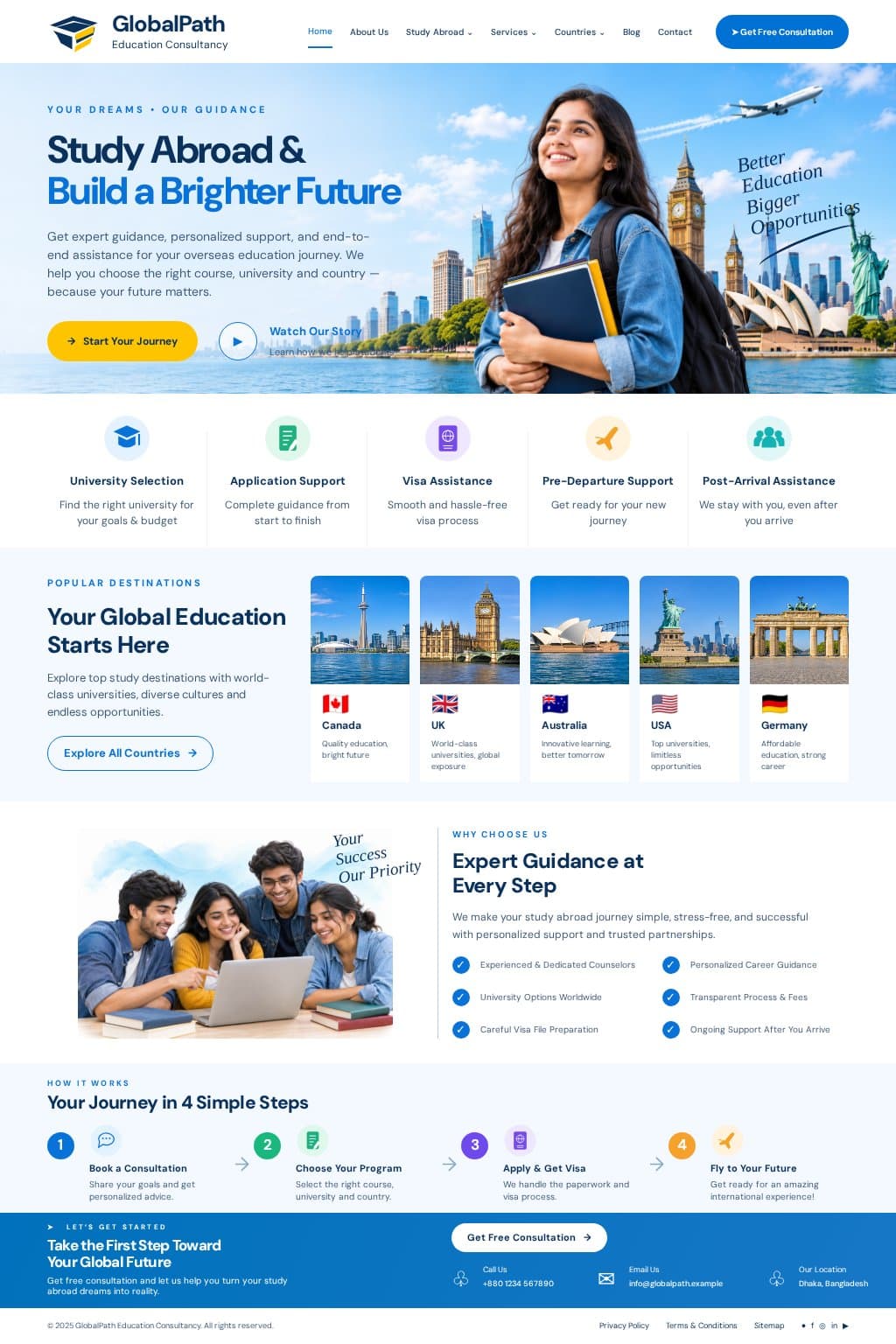
Pick a theme built for your school or kindergarten, your private tutoring practice or your translation office — presentation, online bookings and contact. Customize it visually and publish the same day, with hosting and SSL included.
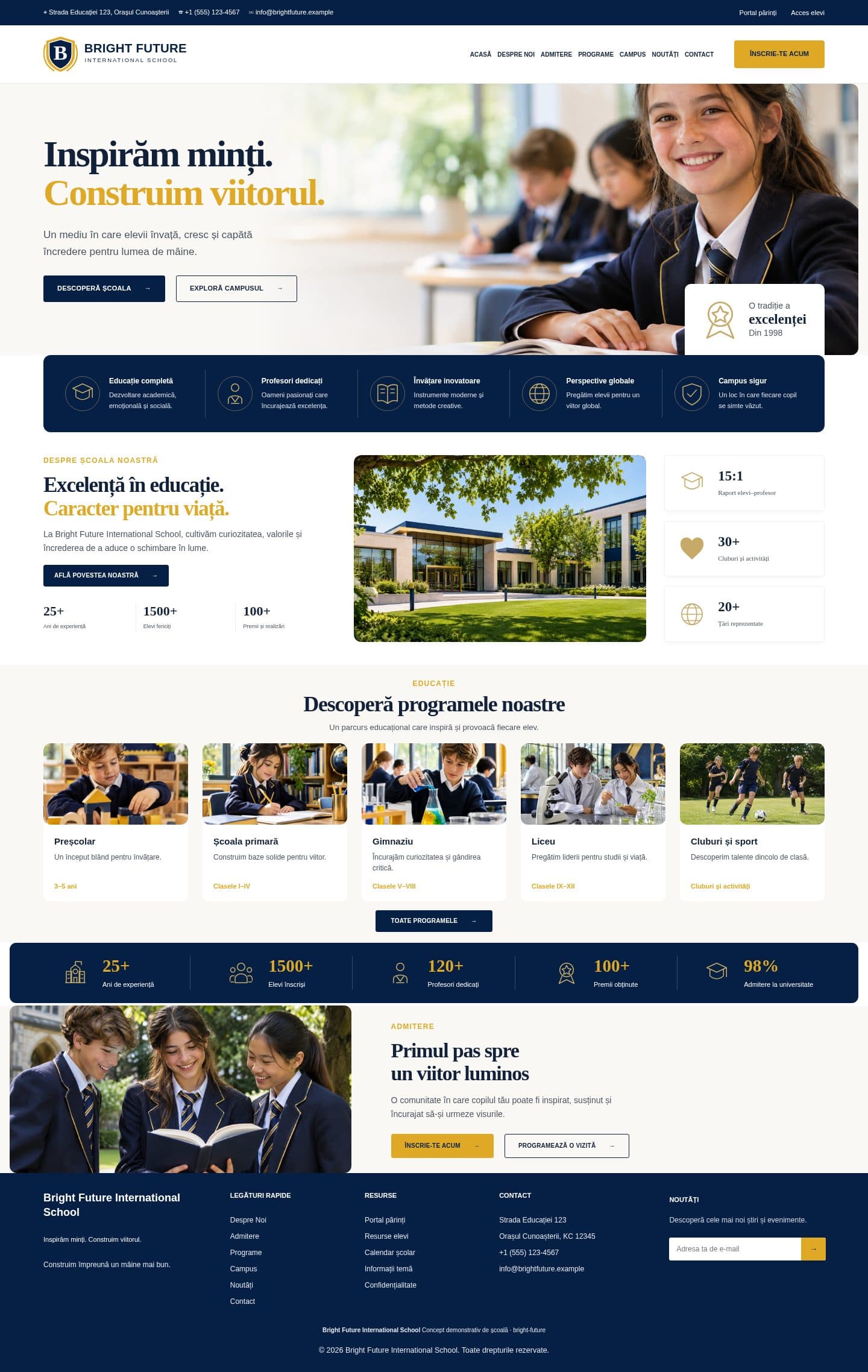
Bright Future
Navy and gold school theme with campus, five programs, admissions, family resources and visit requests. Romanian and English.
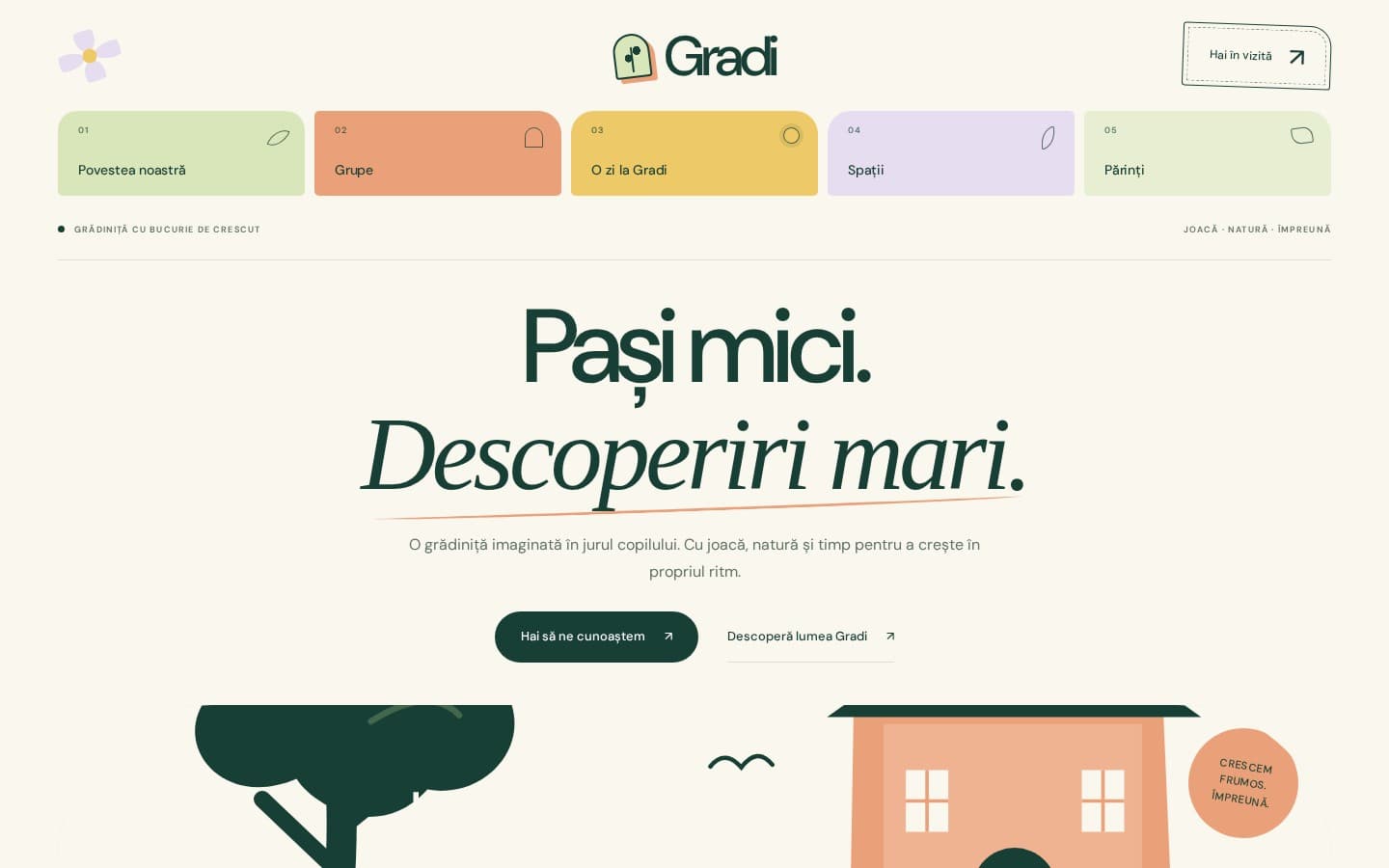
Premium kindergarten theme with cream, forest green and original illustrations. Age groups, daily rhythm, spaces, team, parent guides and visit requests. RO / EN.
A presentation site for a private tutor: testimonial hero, lesson types, student reviews, key stats, blog and contact. Online booking for lessons, no store.
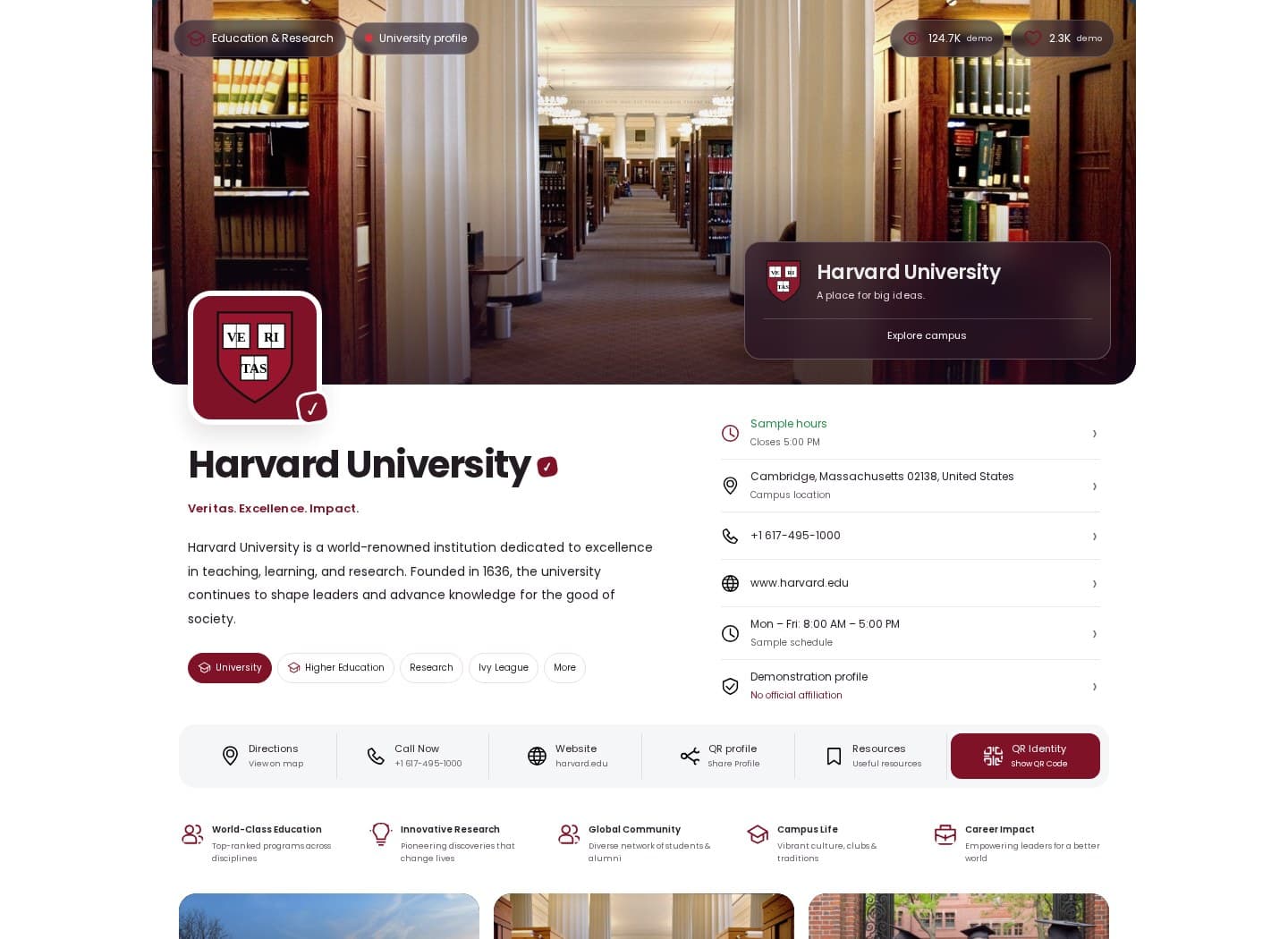
A presentation site for private schools and kindergartens: hero with your institution, welcome section, benefits, teaching staff, testimonials and partners. Online booking for visits/enrolment, no store.
Parents in Pakistan search for a school the way they search for almost everything else: on a phone, in English or in Roman Urdu, and often late in the evening after talking the idea over with relatives. A clear, honest website is the first thing they meet. This guide set explains what such a site needs and how to build it with 4SoftEdu.
What 4SoftEdu is, and what it is not
Private schools, kindergartens, playgroups, tutors, academies and translation bureaus can present themselves through the theme-based website editor. The separate EDU module covers internal education workflows according to the plan, panel availability and access rights. Check those conditions independently; the guides here explain the public pages and their role in helping visitors make an enquiry.
That distinction matters in Pakistan, where many schools already keep registers, fee books and result cards in their own way. The website sits in front of all that. It tells families who you are, which classes you offer, how admission works and how to reach you, while your internal records stay where they are.
The trial is free for 14 days and starts with a card, so a small school or a single tutor can build a site, show it to the board or the family, and then decide whether to keep it.
A gallery of themes you can preview before choosing
An editor for text, photos, colours and page layout
Publishing to a public address on a domain you connect yourself
Servers in the European Union, with the data centre in Finland
The Pakistani education landscape your site speaks into
Education in Pakistan is organised in layers. Policy and curriculum coordination sit partly with the federal Ministry of Federal Education and Professional Training, while schooling itself is a provincial matter handled by the education departments of Punjab, Sindh, Khyber Pakhtunkhwa and Balochistan, with their own arrangements in Islamabad Capital Territory, Azad Jammu and Kashmir and Gilgit-Baltistan. Private schools are generally registered and supervised at provincial level, so the rules you quote on your site should be the ones that apply in your province.
Families also think in terms of examination routes. Many private schools prepare students for the matriculation and intermediate examinations run by the Boards of Intermediate and Secondary Education, while others follow Cambridge O Level and A Level, and a smaller number offer other international pathways. Saying plainly which route you follow, and which board your students sit with, answers a question parents will otherwise ask by telephone.
Language is part of the same picture. Instruction may be in English, in Urdu, in a provincial language such as Punjabi, Sindhi or Pashto at the early stages, or in a mixture. A website written in clear English with a few key lines in Urdu often serves a school better than a long translation nobody has proofread.
How this guide set is organised
The guides follow the order in which a new owner usually works. Start with the page for your type of institution, then use the content checklist to decide what goes on the site. After that come the admissions information page, data protection for children, the theme and editor, a booking link for visits, and finally the domain and local search.
Every guide ends with questions we hear often. They are written for owners who are not technical and who may be building the site between classes or after the last tuition session of the day.
Where a rule depends on the province or on a regulator, the guides say what to check and where to check it, rather than promising that your site is compliant. Regulations change, and the authority that registered your institution is the right final source.