Website builder for private schools, preschools and tutors in the US
Pick a theme, make it yours and publish a public website for your private school, preschool, tutoring business or translation practice. Try it free for 14 days with a card, and pay in US dollars afterwards.
Website themes for schools, kindergartens, tutors and translators
Pick a theme built for your school or kindergarten, your private tutoring practice or your translation office — presentation, online bookings and contact. Customize it visually and publish the same day, with hosting and SSL included.
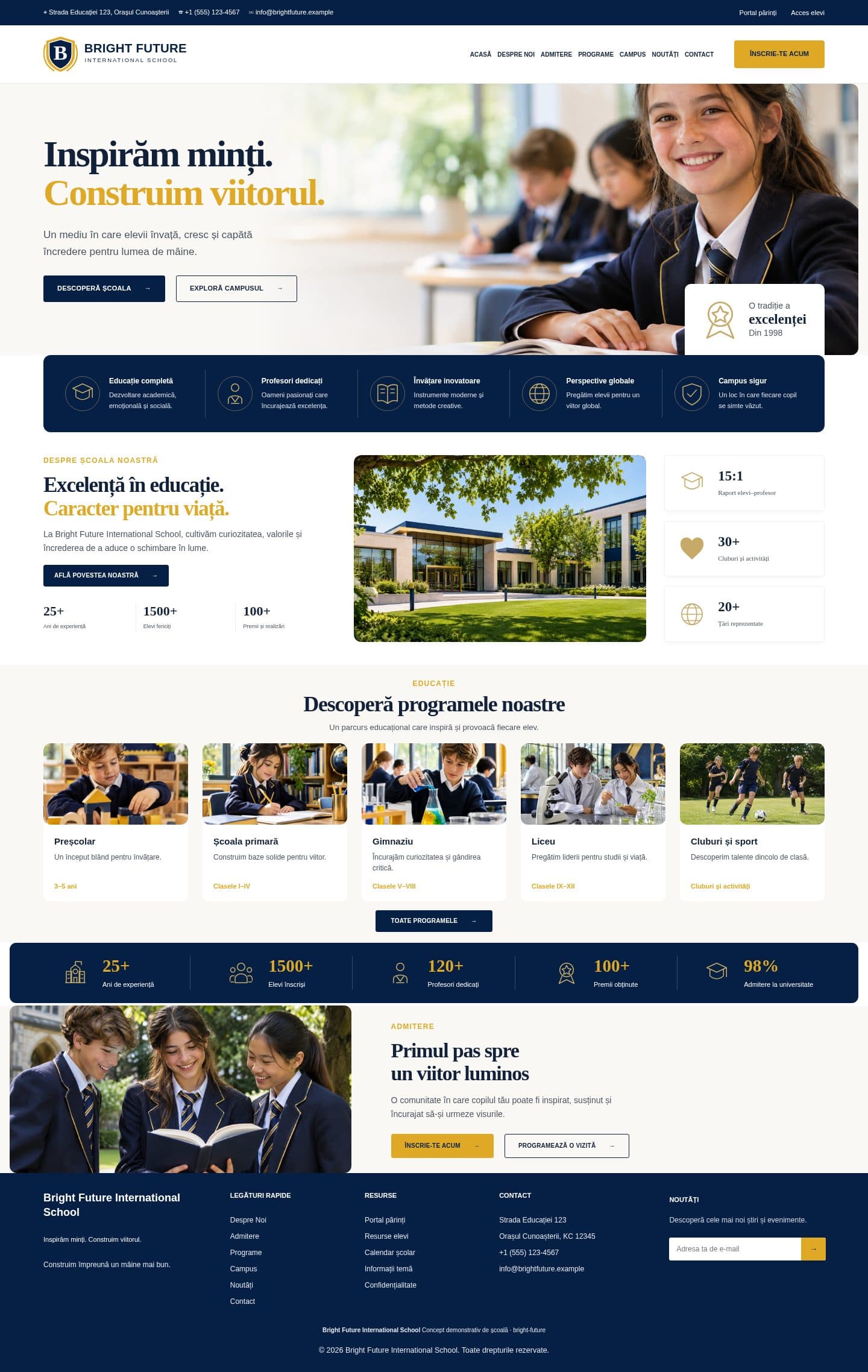
Bright Future
Navy and gold school theme with campus, five programs, admissions, family resources and visit requests. Romanian and English.
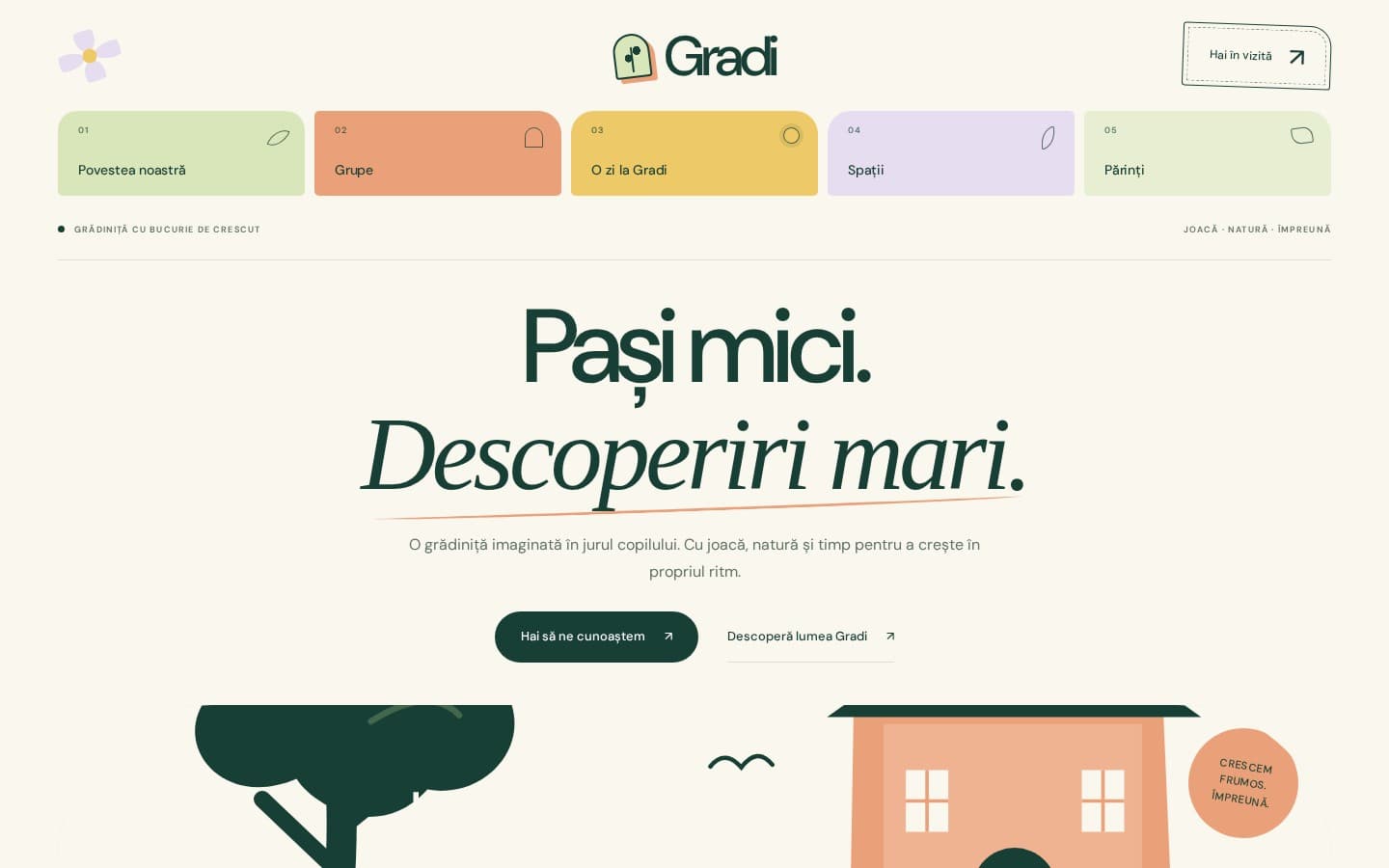
Premium kindergarten theme with cream, forest green and original illustrations. Age groups, daily rhythm, spaces, team, parent guides and visit requests. RO / EN.
A presentation site for a private tutor: testimonial hero, lesson types, student reviews, key stats, blog and contact. Online booking for lessons, no store.
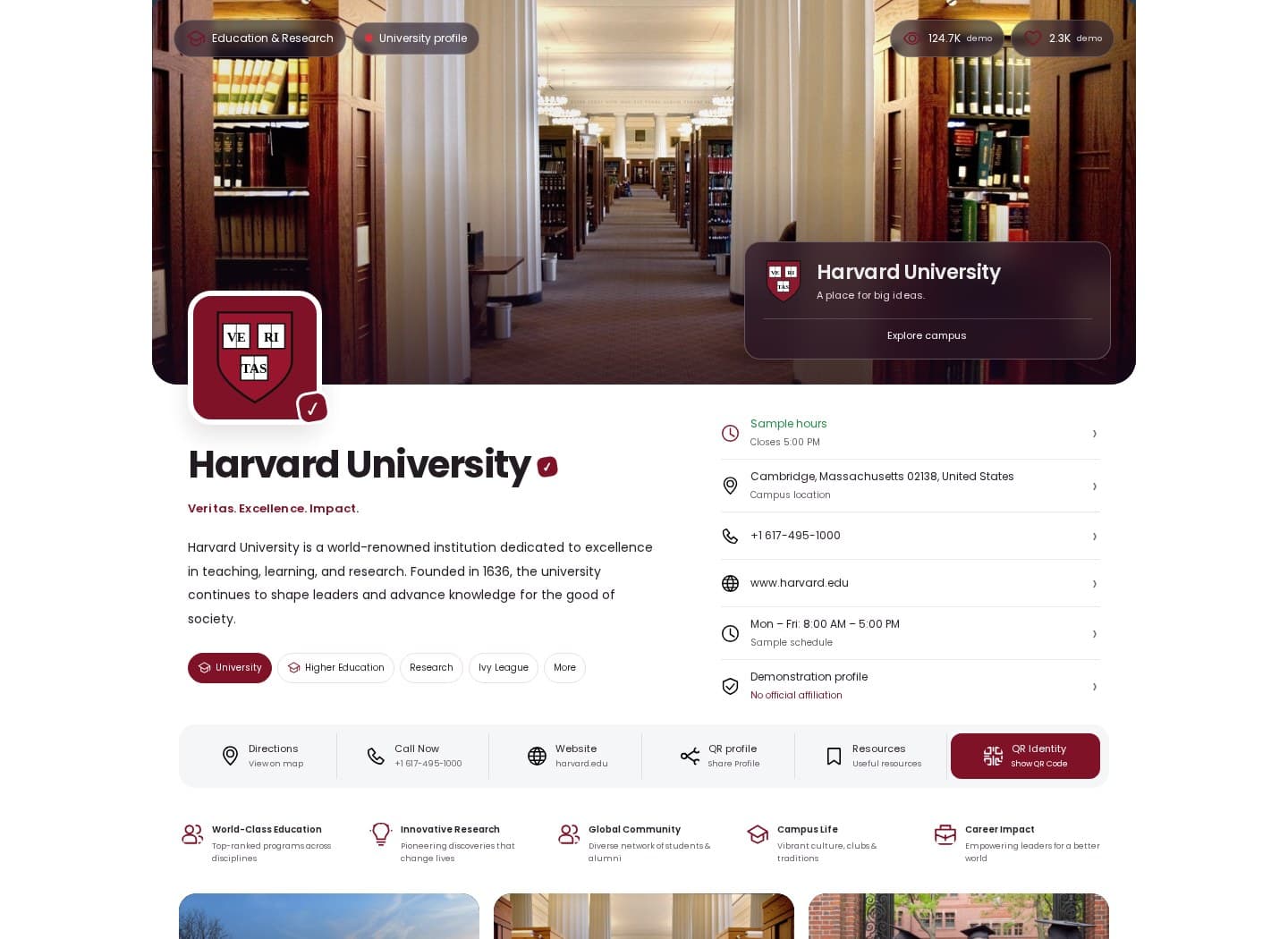
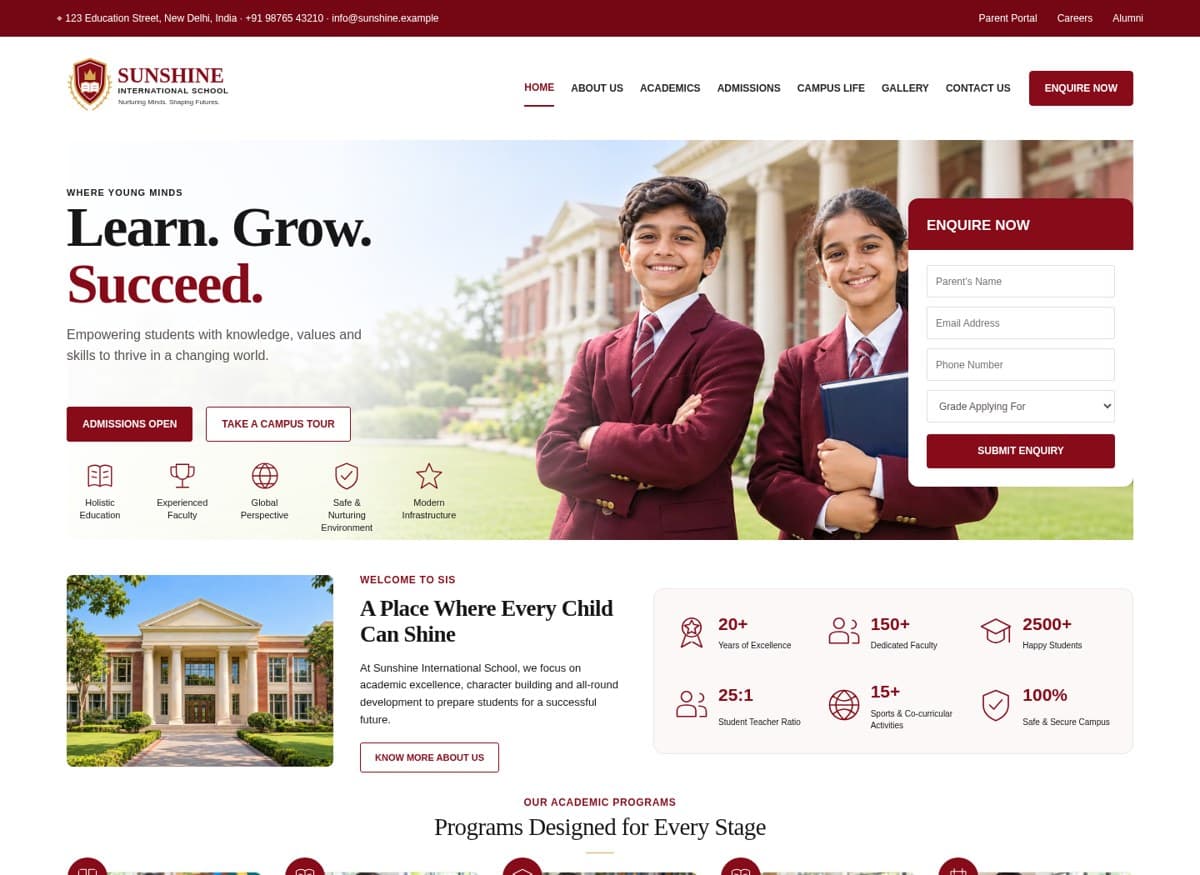
A presentation site for private schools and kindergartens: hero with your institution, welcome section, benefits, teaching staff, testimonials and partners. Online booking for visits/enrolment, no store.
How to Build an Education Website in the United States
Families in the United States research schools, preschools, tutors and language services online long before they pick up the phone. This guide set explains what a local education website should contain and how to build one with 4SoftEdu.
Why the website comes first in American education choices
Education in the United States is highly decentralized. There is no single national school system: public schools are run by thousands of local school districts under the rules of each state, while the U.S. Department of Education mainly administers federal programs and funding. Private schools, independent preschools, tutors and translators sit outside that district structure, so each of them has to explain itself directly to families. A website is usually the first place that explanation happens.
Parents compare options in a very visible way. They search for a private school near them, read about the educational approach, look for tuition and financial aid information, and check whether there is an open house or a tour. A site that answers these questions plainly earns a visit; a site that hides basic facts loses the family to a competitor that did not.
Who you are, whom you serve and which grades or ages you cover
Where you are located, with a clear address and service area
How to take the next step: ask a question, request a tour, apply
What 4SoftEdu is and what it is not
The website builder provides a theme gallery and an editor for the public pages of private schools, preschools, tutors and translation bureaus. The EDU module serves separate internal education workflows when available with the selected plan and panel permissions. The guides below discuss the website that prospective visitors see, rather than the individual records used by an institution.
The free trial lasts 14 days and starts with a card. The domain name is not included: you connect your own domain, for example a .com, .net or .org address you already own or register elsewhere. The servers are located in the European Union, in a data centre in Finland, which is worth stating honestly in your privacy notice.
How the guides in this set fit together
The guides are organized by who you are and by what you need to do. Four guides describe the needs of private schools, preschools and kindergartens, tutors and translation agencies. The others cover a content checklist, an enrollment information page, privacy and children's data, the theme editor, booking visits through a link to a public 4appointments page, and connecting a domain with search basics.
You do not have to read them in order. A tutor might start with the tutoring guide and the booking guide, while a small private school will probably want the checklist and the enrollment page first. Every guide ends with questions that owners commonly ask, and the choices you make remain yours: the guides describe what to check, not what the law guarantees.